Diamond Jewelry Setting: A Guide to Stunning, Secure Choices
23 November 2025 23 min read Hatton Garden, London
Explore diamond jewelry setting options: discover styles, security, and tips to pick the perfect setting for your diamond.
The metalwork that cradles a diamond is called its setting—the single most important choice you'll make after the stone itself. It’s what gives a piece its character, turning a loose gem into a wearable, secure work of art.
Why Your Diamond's Setting Matters Most
Think of the setting as the supporting actor that makes your diamond the star of the show. It’s the architecture that defines everything, from the overall look and feel of the jewellery to how it holds up to daily life. The right setting isn't just a matter of taste; it’s a delicate balance of beauty and practicality.
A classic prong setting, for example, lifts the diamond high off the finger, letting light flood in from every angle for maximum sparkle. On the other hand, a bezel setting, which wraps a solid band of metal around the stone's edge, offers fortress-like protection. It's the perfect choice if you have an active lifestyle or work with your hands.
The Foundation of Style and Security
A well-designed setting has several jobs to do at once. It’s there to protect a valuable gem, but it also has a huge say in the final aesthetic of your ring, pendant, or earrings.
Here are the key roles a diamond setting plays:
Defining the Aesthetic: It sets the mood, whether you’re after something vintage and romantic, sharp and modern, or timeless and classic.
Enhancing Brilliance: The design literally controls how light hits the diamond, which directly affects its fire, flash, and sparkle.
Providing Security: A skilfully crafted setting protects your diamond from knocks, snags, and the nightmare scenario of it coming loose.
Creating Illusion: Certain styles, like the ever-popular halo, use a frame of smaller diamonds to make the centre stone look significantly larger than its actual carat weight.
Understanding these fundamentals is the first step toward choosing a design you'll be happy with for decades. The metal you choose for the setting is just as critical for both looks and longevity. For a closer look at the most popular choices, explore the key differences between white gold and platinum.
A Reflection of Personal Taste in a Thriving Market
Ultimately, your choice of setting is a deeply personal one. Here in the UK, the jewellery market is huge—generating around USD 5.76 billion in revenue—and diamond rings are a massive part of that story. In fact, they make up an estimated 38% of the entire market, which shows just how much thought and emotion goes into picking the perfect piece. The setting is what makes each one unique.
A diamond setting is the silent storyteller of your jewellery. It conveys taste, celebrates moments, and safeguards a precious investment, turning a beautiful stone into a personal treasure.
A Visual Guide to Popular Setting Styles
Choosing a diamond setting is like choosing the perfect frame for a masterpiece. Every style has its own personality, influencing everything from the way the diamond sparkles to how secure it is in its new home. To help you get a feel for the options, this guide breaks down the most popular designs.
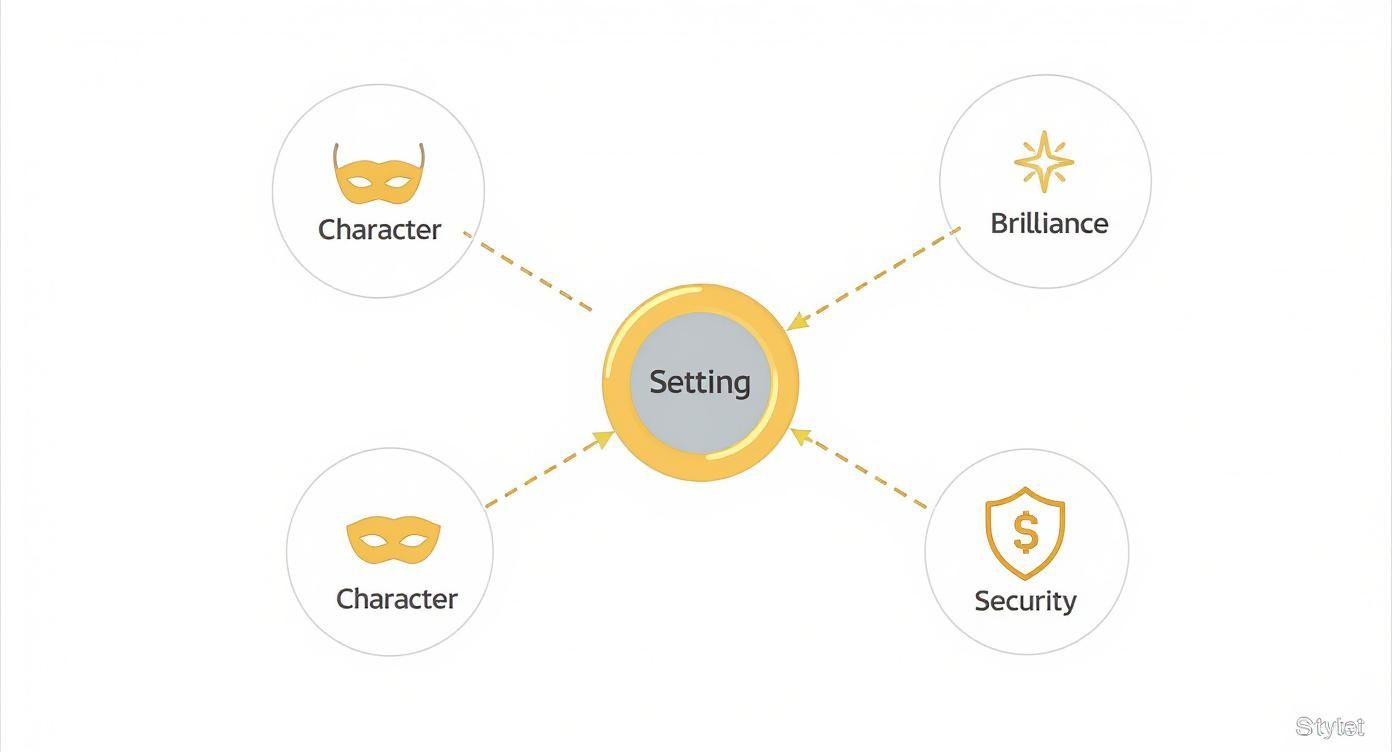
Think of it as a balancing act between three key factors: the setting's character (its look and feel), the diamond's brilliance, and its everyday security. Each style prioritises these differently.
Understanding how these elements work together is the key to finding a style that not only looks stunning but also fits your lifestyle. Let's see how they come to life in the most-loved designs.
The Classic Prong Setting
Imagine a graceful pedestal lifting a sculpture towards the light. That's the essence of a prong setting. Thin metal claws, or 'prongs', grip the diamond at key points, holding it securely while leaving most of the stone exposed.
This minimalist design is the most popular choice for engagement rings for one simple reason: it lets an incredible amount of light enter the diamond from all sides. The result is unparalleled brilliance and fire.
Most prong settings use either four or six prongs.
Four Prongs: Creates a modern, slightly squared-off look that shows more of the diamond.
Six Prongs: Offers extra security and has a knack for making a round diamond appear even rounder.
While this setting truly maximises sparkle, its elevated profile can be more prone to snagging on clothing. Regular checks are essential to make sure the prongs stay tight and secure.
The Secure Bezel Setting
Think of a bezel setting as a protective metal ‘hug’ for your diamond. Instead of claws, a thin, custom-fitted rim of precious metal completely encircles the edge of the stone, holding it firmly in place.
This design offers the highest level of security, making it a fantastic choice for anyone with an active lifestyle or a job that’s tough on their hands. There are no prongs to catch, and the diamond's girdle is fully protected from accidental knocks.
A bezel setting trades some of the diamond's side-view sparkle for ultimate peace of mind and a sleek, contemporary aesthetic. It is the most durable and secure diamond jewelry setting available.
This setting creates a very clean, modern look. A full bezel provides maximum protection, while a partial bezel leaves parts of the stone's edge open for a unique stylistic twist.
The Elegant Channel Setting
Picture a row of diamonds nestled securely within a metal channel, sitting perfectly flush with the band. A channel setting does just that, sandwiching a line of stones between two parallel walls of metal, with no prongs in between.
This technique creates a smooth, uninterrupted flow of brilliance. It's an incredibly popular choice for wedding bands and for the accent diamonds on the shoulders of an engagement ring.
Because the stones are set low and their edges are protected, a channel setting is very secure and won't snag. It delivers a sophisticated and seamless river of light that complements a central stone beautifully.
The Dazzling Pavé Setting
The term "pavé" comes from the French word for "paved," which perfectly describes this setting's appearance. With a pavé setting, the surface of the jewellery is literally paved with tiny diamonds set incredibly close together.
These small stones are held in place by minuscule beads of metal, creating what looks like a continuous surface of sparkle. The effect is breathtaking, adding intense fire and texture to any piece.
This is a delicate, intricate style that demands significant craftsmanship. The UK jewellery market places a high value on these skills, with much of the nation's manufacturing centred in Birmingham’s Jewellery Quarter. This historic hub produces about 40% of all UK-made jewellery and has been a centre for innovation since the 1700s.
The Glamorous Halo Setting
A halo setting is designed to create a powerful visual impact. It features a central diamond completely encircled by a ring of smaller, pavé-set diamonds. This frame of sparkle does two amazing things at once.
First, it draws the eye to the centre stone, making it the undeniable focal point. Second, it creates a brilliant illusion of size, making the main diamond appear significantly larger than its actual carat weight—sometimes by as much as half a carat.
This style is perfect for anyone wanting to maximise glamour. Halos can be crafted for any diamond shape, from round and oval to pear and emerald cuts, enhancing each one's unique silhouette. Exploring different custom engagement ring designs shows just how versatile this stunning setting can be.
The Modern Tension Setting
Finally, the tension setting is a true feat of engineering. In this design, the diamond is held in place not by prongs or bezels, but by the compressive force of the metal band itself. The jeweller cuts tiny grooves into the metal, and the calibrated pressure of the shank is what secures the stone.
This creates the illusion that the diamond is floating in mid-air, suspended between two ends of the band. It's a dramatic, minimalist, and exceptionally modern look that exposes the diamond to light like no other setting.
Because of the precise engineering required, tension settings are crafted for durability and are surprisingly secure. They offer a unique, contemporary aesthetic for those who appreciate both art and science in their jewellery.
At-a-Glance Comparison of Diamond Setting Styles
Here’s a quick comparison of the key features of these popular settings, from their visual impact to everyday durability.
Setting Style
Primary Benefit
Best For
Security Level
Prong
Maximum brilliance & sparkle
Showcasing a single stone
Good
Bezel
Ultimate protection & security
Active lifestyles, modern look
Excellent
Channel
Sleek look, no snagging
Wedding bands, side stones
Excellent
Pavé
Intense, all-over sparkle
Adding glamour & texture
Good
Halo
Makes centre stone look larger
Maximising visual impact
Good
Tension
Dramatic "floating" appearance
Contemporary, minimalist styles
Very Good
Each setting tells a different story and offers a unique blend of beauty and practicality. The best choice is always the one that feels right for you and the life you'll live with it.
How Settings Shape Light and Ensure Security
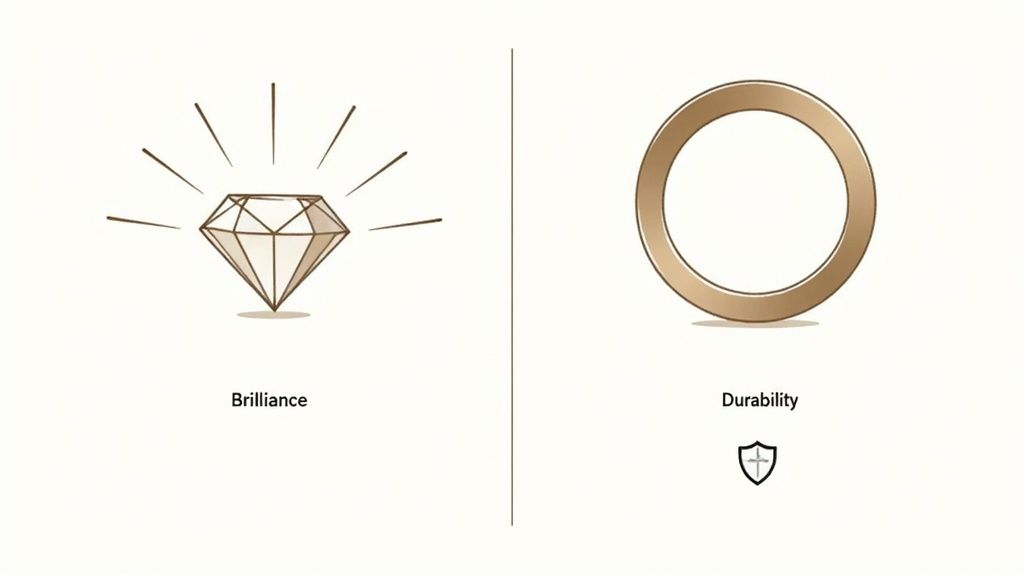
A diamond setting does two jobs at once: it's the stage that makes your diamond perform, and it's the bodyguard that protects it for life. Getting your head around how a setting plays with light while keeping the stone safe is the key to choosing a piece that’s as tough as it is beautiful. Think of it as a constant negotiation between sparkle and strength.
The magic of a diamond is all about how it handles light. A well-cut diamond is like a tiny, perfectly engineered hall of mirrors. Light goes in the top, bounces around the internal facets, and shoots back out to your eye as that incredible fire and brilliance.
A setting’s design has a massive say in this light show. It dictates how much light gets into the diamond in the first place, and from which angles. It’s the science behind the sparkle, and even tiny tweaks to the metalwork can make a world of difference.
How Settings Maximise Brilliance
The more open a setting is, the more light can flood the diamond. A classic prong setting is the master of this. By using just a few minimal metal claws to hold the stone, it leaves the diamond's sides almost completely exposed. Light can pour in from nearly every direction, creating that explosion of brilliance that makes it the go-to for solitaire rings.
Other settings get clever, using optical illusions to amplify the sparkle.
Halo settings frame a central diamond with a circle of smaller stones. This creates a much bigger surface area of sparkle, tricking your eye into seeing one huge, brilliant gem. It's no surprise that, according to a 2023 industry study, oval diamonds—often set in halos—now make up 23% of all engagement rings. It’s all about boosting that visual impact.
Pavé settings do something similar, covering the band with what looks like a seamless carpet of tiny diamonds. The metal beads holding them are so small they practically vanish, creating an effect of pure, uninterrupted light.
On the other hand, a bezel setting puts security first. By wrapping the diamond’s entire edge in a thin metal collar, it does block some light from entering the sides. The trade-off is unmatched protection, but the sparkle you see face-up, from light entering the top, is still absolutely spectacular.
This interplay between metal and light is where the real artistry of jewellery design comes in. Every style offers a different way to chase that coveted sparkle.
Ensuring Your Diamond Stays Put for a Lifetime
While brilliance is what makes you fall in love, security is what makes it last. A setting’s main job is to hold that diamond tightly, protecting it from the knocks and bumps of daily life. The structural integrity of the setting is everything, and different designs offer very different levels of protection.
A prong setting, for all its sparkle, needs a bit of looking after. Over years of wear, those metal prongs can get thin, catch on things, or wear down. If a prong snags on a jumper or gets knocked on a counter, it can lift just enough to put your diamond at risk. That's why regular check-ups with a jeweller are so important—to catch wear and tear before it becomes a disaster.
At the other end of the scale is the tension setting, which is a true feat of engineering. It holds the diamond in place using nothing but the precisely calibrated pressure of the ring’s band. You get this stunning "floating" look, but its security relies completely on the perfect structural integrity of the ring. It’s incredibly secure, but it has to be made by an expert.
The Balance Between Beauty and Durability
At the end of the day, choosing a setting is about finding your personal sweet spot between the look you want and the security you need. There’s no single “best” option—just the one that’s right for your lifestyle.
Someone working in an office could happily wear a delicate pavé band every day. But a gardener, a nurse, or anyone who works with their hands would be far better off with the bomb-proof protection of a bezel or channel setting.
This balance is the soul of good jewellery design. It’s why some settings become timeless classics and others are exciting modern innovations. Understanding this dynamic gives you the power to choose a piece you can wear with total confidence, knowing it was built to go the distance.
Matching a Setting to Your Lifestyle
The most beautiful setting is one that feels like a natural part of you. While a stunning design is what catches your eye, the real test is how well it holds up to your day-to-day life. A ring that’s impractical for your routine will quickly lose its charm, so the key to long-term happiness is matching the design to what you actually do.
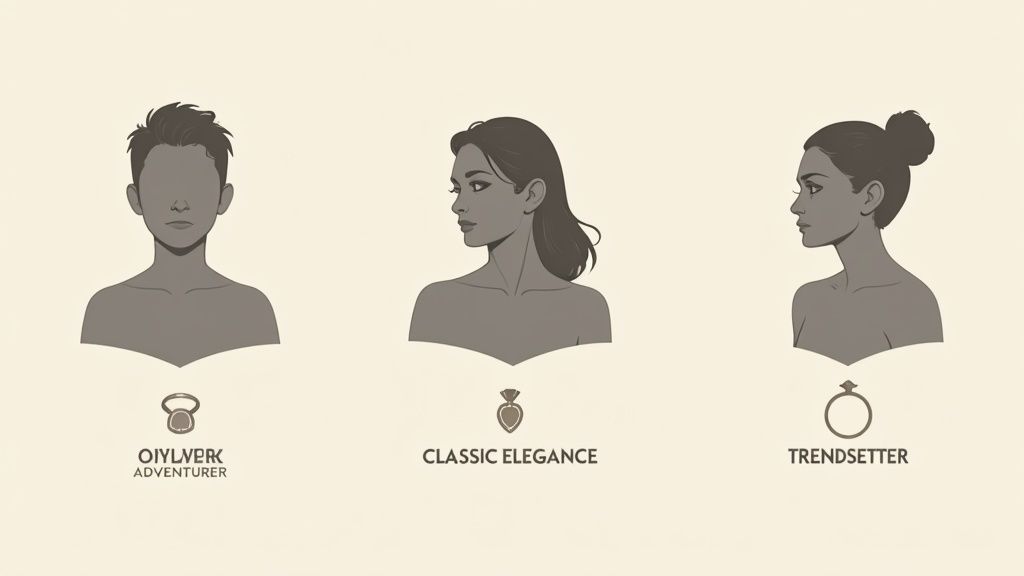
To get it right, think about which of these personas best describes you. Are you always on the move, valuing function over fuss? Or are you drawn to timeless, elegant pieces? Pinpointing your core style will lead you straight to the settings that will serve you best for years.
For the Outdoor Adventurer or Active Professional
If your life involves lots of outdoor activity, working with your hands, or just being constantly in motion, durability has to be your top priority. You need a setting that shields your diamond from knocks, snags, and the general wear and tear of a busy day. High-profile settings with exposed prongs are a risk you just don't need to take.
Instead, look for low-profile designs that keep the diamond snug against the band and protected from all sides.
Bezel Setting: This is the undisputed champion of security. A metal collar wraps around the entire edge of the diamond, offering maximum protection with a sleek, modern look that won’t catch on clothing or equipment.
Flush Setting: With this design, the diamond is set directly into the band, sitting perfectly level with the metal. It’s incredibly secure and has a minimalist feel, perfect if you want sparkle without the fuss.
Channel Setting: For bands with a row of diamonds, this is an excellent, snag-free choice. The stones are locked securely between two parallel walls of metal.
Choosing a durable setting doesn’t mean sacrificing beauty. It means making a smart choice that offers peace of mind, so you can wear your treasured piece with confidence, no matter where your day takes you.
For the Classic Elegance Enthusiast
If your personal style is more timeless and sophisticated, your perfect setting is likely one that has proven its appeal for generations. You value clean lines, graceful silhouettes, and a design that puts the focus squarely on the diamond's natural beauty. Your jewellery should be elegant, versatile, and enduringly stylish.
These classic choices are all about maximising brilliance with a refined aesthetic.
Solitaire Prong Setting: The undisputed classic. A four or six-prong setting lifts the diamond high, flooding it with light for breathtaking sparkle. It's a simple, elegant statement that will never go out of style.
Three-Stone Setting: Symbolising the past, present, and future, this setting is rich with meaning. It creates a bigger look than a solitaire and allows for beautiful combinations of different diamond shapes.
These settings are perfect for someone who appreciates tradition and wants a piece that will look just as stunning in twenty years as it does today. They transition effortlessly from everyday wear to special occasions.
For the Modern Trendsetter
If you love contemporary design and are always drawn to unique, eye-catching styles, you'll want a setting that’s a bit more adventurous. You’re looking for a piece that reflects your modern taste and makes a bold statement. Your ideal setting is a conversation starter, showcasing innovative craftsmanship and a touch of glamour.
Consider these fashion-forward options.
Halo Setting: For maximum impact, nothing beats a halo. The frame of smaller diamonds makes the centre stone look significantly larger and creates an incredible, glittering surface.
Tension Setting: A true feat of engineering, this setting makes the diamond appear to float, held in place only by the pressure of the band. It’s a dramatic, minimalist, and thoroughly modern choice.
Pavé Setting: A band covered in a 'pavement' of tiny diamonds delivers an intense, all-over sparkle. It’s a glamorous look that has become incredibly popular.
These styles are especially relevant in the UK, where consumer tastes are always evolving. The UK diamond jewellery market often sees buying patterns driven by special occasions, with the average spend on an engagement ring falling between £2,000 and £4,000. Increasingly, that investment is going towards modern settings like halo and pavé, which boost both the diamond's appearance and its security. You can dig deeper into these trends in UK jewellery retailing on mintel.com.
Caring for Your Diamond Jewellery Setting
Choosing the perfect setting is just the start—protecting your investment with the right care is what makes it last a lifetime. Proper maintenance keeps your pieces looking their absolute best and, more importantly, prevents the heartache of losing a precious stone. Think of it as essential upkeep for your most treasured possessions.
Most of this care is simple enough to do right at home. A gentle clean is brilliant for removing the daily build-up of oils, lotions, and dust that can dull your diamond’s fire and clog up the details of its setting.
At-Home Cleaning and Inspection
A quick, safe clean is as easy as a bowl of warm water with a few drops of mild washing-up liquid. Let your jewellery soak for 20-40 minutes to loosen any grime.
Next, gently scrub it with a soft-bristled toothbrush. Pay extra attention to the tricky spots underneath the diamond and around the claws. This is especially important for intricate designs like pavé or halo settings, where dirt loves to hide.
Rinse the piece thoroughly under warm running water and pat it dry with a soft, lint-free cloth. Steer clear of harsh chemicals or abrasive materials like paper towels, which can cause damage. For a more detailed guide, see our expert advice on the best methods for using a diamond ring cleaner safely at home.
Beyond cleaning, a regular once-over is your first line of defence against damage. At least once a month, take a moment to check your jewellery in good light.
Your Monthly Inspection Checklist:
Listen Closely: Hold the ring near your ear and give it a gentle tap. Can you hear a faint rattle? That could be a loose stone.
Check the Prongs: Look closely at each prong. Does one look bent, worn down, or shorter than the others? A snagging prong is a major red flag.
Examine the Stone: See if the diamond moves at all in its setting. It should be held completely firm with zero wiggle room.
Catching these little warning signs early means you can get professional help before a minor issue becomes a costly problem.
When to Seek Professional Servicing
While home care keeps things sparkling day-to-day, it’s no substitute for a jeweller’s expertise. We recommend bringing your diamond jewellery in for a professional check-up and deep clean at least once a year, or straight away if you suspect something is wrong.
Think of a professional jeweller as your diamond's doctor. An annual visit ensures everything is secure, clean, and in perfect health, safeguarding your piece against unforeseen damage and wear.
A professional has the tools and experience for maintenance that just isn’t possible at home. We use high-powered steam and ultrasonic equipment to safely blast away stubborn grime, restoring your piece to its original showroom brilliance.
More importantly, a jeweller can spot and fix signs of wear that are invisible to the naked eye. Worn-down prongs, for example, are the number one cause of lost diamonds. A service like retipping rebuilds the tips of the prongs with matching metal, making your setting secure for years to come.
Here at Opulence Jewellery Services, our on-site workshop allows us to perform these crucial checks and repairs, often while you wait, so your cherished jewellery never has to leave your sight.
Expert Repairs and Modern Redesigns
Even with the best care, life happens. A prong gets knocked on a kitchen counter, a tiny pavé stone vanishes, or a cherished heirloom starts to feel more like their style than yours. When your jewellery needs a bit of expert help, it’s good to know what’s possible—whether that’s a precision repair or a complete creative overhaul.
It's not magic, but it’s close. Behind the scenes in a jeweller's workshop, skilled artisans blend time-honoured techniques with modern tech to bring your pieces back to life. Let's look at what that involves.
Common Repairs and What to Expect
Everyday life puts your jewellery through a lot. The good news is that most common issues are a straightforward fix for an experienced goldsmith. Knowing what to look for and how we sort it out can give you real peace of mind.
Here are a few of the frequent jobs we handle at Opulence Jewellery Services:
Replacing a Lost Pavé Stone: It’s incredibly common for one of these tiny accent diamonds to go missing. Our gemmologists meticulously source a replacement that's a perfect match in size, colour, and clarity to its neighbours, making the repair completely invisible.
Fixing a Bent or Broken Prong: A damaged prong is a high-security risk for your main stone. Using advanced laser welders, we can often rebuild the claw without even unsetting the diamond, reinforcing its grip and restoring its integrity.
Repairing a Worn Shank: The band at the bottom of a ring naturally thins over time from wear. We can perform a half-shank or full-shank replacement, adding new, durable metal to bring back its original thickness and strength.
These aren't just cosmetic fixes; they are vital for the long-term safety of your diamonds. A prompt, professional repair stops a minor issue from turning into a major loss.
"A well-executed repair is invisible. It doesn't just fix the problem—it restores the piece's original strength and beauty, honouring the sentiment and craftsmanship it represents."
Remodelling and Bespoke Setting Work
Sometimes, you still adore the diamond, but the setting it's in feels dated or just isn't you anymore. This is where the really exciting work begins—remodelling and bespoke design. Reimagining an heirloom is a fantastic way to honour its past while creating something that tells your own story.
It all starts with a chat about your vision. Have you dreamt of taking a solitaire from a simple band and setting it into a glamorous halo? Or maybe you have stones from several old pieces that you'd love to combine into a single, stunning new design.
The Art of Transformation
Taking an existing piece apart and rebuilding it is a delicate, highly skilled process. Our artisans are experts at carefully unsetting stones, preserving them perfectly as they get ready for their new home. From there, the possibilities are practically endless.
We can create a brand-new diamond jewelry setting from scratch based on your ideas, or we can modify an existing piece to better fit your lifestyle. This could involve:
Designing a New Setting: We’ll work with you to sketch and model a completely new piece that shows off your diamond in a fresh, exciting way.
Adding Accent Stones: Introducing new diamonds or even coloured gemstones can completely change the personality of a ring, pendant, or pair of earrings.
Changing the Metal: Swapping yellow gold for platinum or rose gold can give a piece an instant update and a whole new feel.
Whether it’s a simple repair or a full redesign, trusting your jewellery to a specialist workshop is key. Here at our Hatton Garden location, you can often watch our craftspeople at work and see the precision that goes into every task. And with our same-day service for many repairs, your treasured pieces are back with you in no time, ready for their next chapter.
Your Diamond Setting Questions, Answered
Even after getting to grips with the different styles, it’s completely normal to have a few more questions. Choosing a setting is a big decision, and feeling confident comes from having clear, honest answers.
Here’s what our clients most often ask us at our Hatton Garden workshop.
Which Setting Makes a Diamond Look Biggest?
Without a doubt, the halo setting is your best friend if you want to maximise visual impact. It’s a brilliant and powerful optical illusion.
The setting frames your main diamond with a glittering border of smaller, pavé-set stones. This sparkling perimeter seamlessly extends the surface area of the centre gem, tricking the eye into seeing one single, much larger diamond. The continuous sparkle blurs the lines between the main stone and its halo, creating a truly glamorous, high-impact look.
What Is the Most Secure Type of Diamond Setting?
For ultimate security and total peace of mind, the bezel setting is the undisputed champion. Unlike prong settings that use claws to grip the stone, a bezel wraps the entire edge of the diamond in a thin, custom-made metal rim.
This design offers 360-degree protection against knocks, bumps, and snags. It’s the perfect choice for anyone with a very active lifestyle, a hands-on job, or for softer gemstones that are a bit more vulnerable to chipping.
How Often Should I Have My Ring Setting Checked?
Think of it like an MOT for your most treasured pieces. We strongly recommend having your diamond jewellery professionally checked at least once a year.
During a proper inspection, a jeweller uses magnification to examine every part of the setting. We check each prong for wear and tear, make sure every stone is tight in its seat, and look for any early signs of metal fatigue. If you wear the piece every day or it takes a hard knock, it's always smart to bring it in for a check-up sooner rather than later.
For any more questions or to have your jewellery professionally inspected, repaired, or even redesigned, trust the experts at Opulence Jewellery Services. Our on-site Hatton Garden workshop offers same-day service for many repairs, so your precious items are handled with the utmost care and returned to you quickly. Pop in and see how we can restore and protect your cherished jewellery: https://www.opulencejewelleryservices.co.uk.