Design Your Own Rings: design your own rings and craft your perfect piece
11 January 2026 20 min read Hatton Garden, London
Want to design your own rings? This guide walks you through material choices, styles, and how to work with a jeweller to bring your idea to life.
It all begins with an idea. But how do you take a feeling, a fleeting image, or a collection of styles you love and turn it into a concrete design for a ring? This is where the real magic starts, moving beyond just scrolling through Pinterest and starting to build a practical framework for your vision.
This initial phase is all about discovery. It’s where you define the soul of the piece before a single sketch is made or a gemstone is chosen. And thinking about the wearer’s daily life is just as crucial as deciding on a style.
Turning Your Vision Into a Tangible Design
Building a Practical Mood Board
A mood board is your visual blueprint. It's more than a collection of pretty pictures; it’s a focused tool that helps you and your jeweller get on the same page about the ring's core identity. Instead of just saving dozens of images, try to organise them to tell a story.
Your mood board should capture key elements like:
Style and Era: Are you drawn to the clean, geometric lines of Art Deco, the flowing, organic shapes of Art Nouveau, or the bold simplicity of modern minimalism?
Colour Palette: Gather images that reflect your preferred metal colours—cool platinum and white gold, warm yellow gold, or romantic rose gold.
Texture and Finish: Do you envision a mirror-like high polish, a subtle matte finish, or a rustic hammered texture?
Overall Feeling: Include images that evoke the emotion you want the ring to convey—be it romantic, powerful, delicate, or avant-garde.
A well-curated mood board is the single most effective communication tool you can bring to a jeweller. It speaks a universal language, instantly conveying nuanced aesthetic preferences that words alone can’t capture.
This process helps you pinpoint the specific features that will make the ring uniquely yours. You might discover you consistently favour rings with delicate milgrain edging or that you're drawn to bezel settings for their security and sleek profile.
Considering Lifestyle and Durability
A bespoke ring should be worn and loved, not kept in a box. Before you get too attached to certain design elements, think realistically about the wearer’s daily activities. A person with an active, hands-on job might find a high-profile setting with intricate pavé diamonds impractical, as it could snag or be prone to damage.
For instance, a nurse who frequently wears gloves might prefer a low-profile, rub-over setting to prevent catching. An artist who works with their hands might opt for platinum over 18ct gold for its superior durability. This kind of practical thinking ensures the ring is not just an object of beauty but a comfortable and lasting part of their life. For those creating a wedding ring, our guide on how to build your perfect wedding ring offers more practical insights.
Defining Your Core Concept
With your mood board and lifestyle factors in mind, you can now hone in on your core concept. This is where the UK's love for personal expression in jewellery truly shines. The UK jewellery market recently generated around USD 5.76 billion in revenue, with rings being the single most important product category, accounting for approximately 38.1% of all sales. This vibrant market shows a clear demand for unique, meaningful pieces.
So, ask yourself: what is the single most important element of your design? Is it a specific gemstone? An engraving with personal meaning? Or is it the overall silhouette? Identifying this "hero" feature will guide all other decisions, ensuring the final piece is cohesive and truly impactful.
Once your vision is realised and your ring becomes a tangible design, exploring some professional product photography tips can help you beautifully capture its unique beauty for years to come.
Choosing the Right Metals and Gemstones
Once you've got a clear vision, it's time for one of the most exciting parts: choosing the actual materials that will bring your ring to life. The metal and gemstones you pick are the soul of the piece. They don't just define how it looks, but also how it feels, how durable it is, and how you'll care for it for years to come.
It’s a balancing act between style, practicality, and what feels right to you. The precious metal is the foundation—it sets the entire tone, from the colour palette to the ring’s structural strength. Every metal has its own personality, from the cool, understated strength of platinum to the classic, sunny warmth of yellow gold.
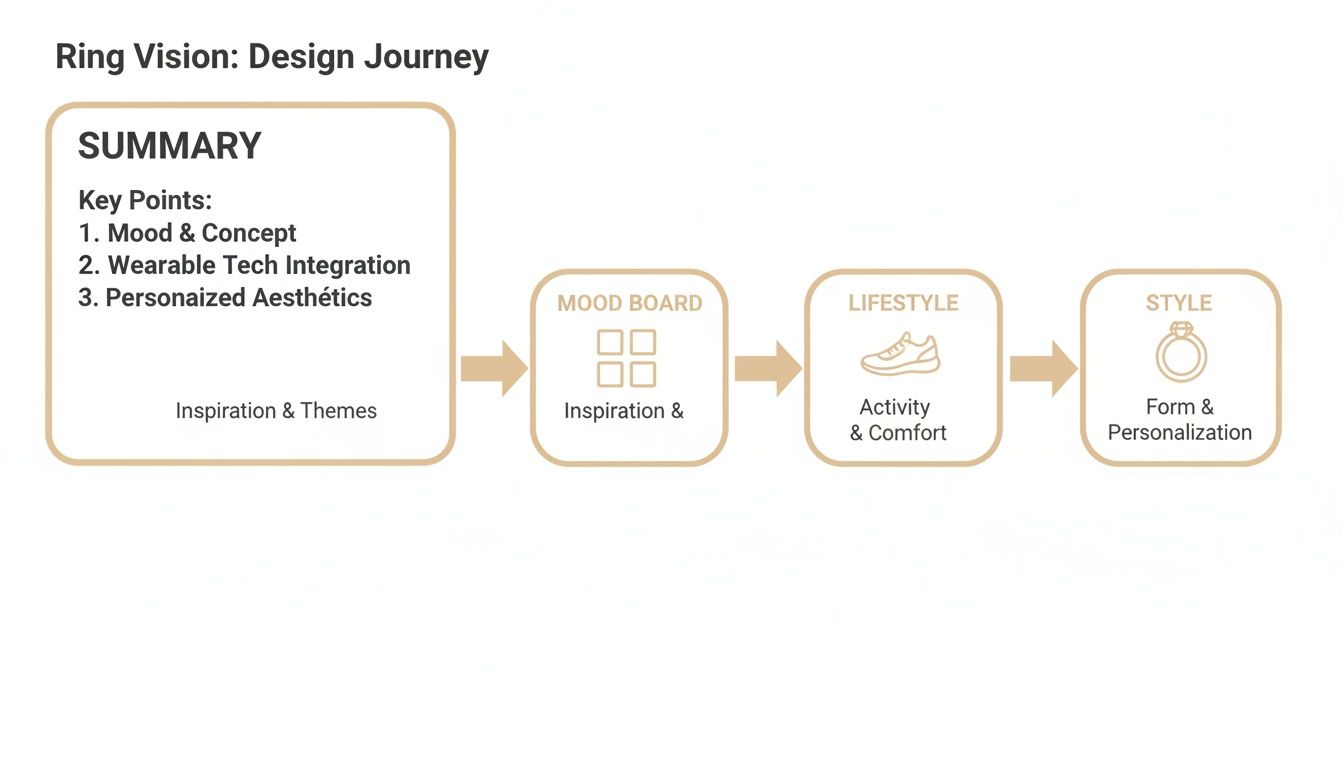
This is where all your initial brainstorming comes into play.
As you can see, every element—from the styles you've pinned to your daily routine—helps us narrow down the perfect materials for your bespoke ring.
Selecting the Perfect Precious Metal
When you design your own rings, the metal is far more than just a holder for the stone; it’s the frame for your masterpiece. Your lifestyle is a huge factor here. If you’re active or work with your hands, something tough is essential.
Platinum, for instance, is exceptionally durable and naturally hypoallergenic, making it a superb choice for a ring that’s going to be worn every day and see a bit of action. Its natural white lustre won't fade or change colour over time.
White gold gives you a similar bright, silvery look but is usually a bit kinder on the budget. It's an alloy of pure gold mixed with white metals, then plated with rhodium for extra shine and hardness. This rhodium plating may need a top-up every few years to keep it looking crisp and white. To really get into the details, have a look at our guide on the differences between white gold and platinum.
For warmer tones, there’s always classic yellow and romantic rose gold. The purity of gold is measured in karats, which affects both its colour and hardness. 18ct gold is 75% pure gold and offers a rich, deep colour with a great balance of strength. Understanding the differences between 14k, 18k, and 24k gold can be incredibly helpful when deciding what’s right for your design and lifestyle.
Precious Metal Comparison for Your Custom Ring
To make things a little easier, here’s a quick breakdown of the most popular metals we work with in our Hatton Garden workshop.
Metal
Appearance
Durability (Hardness)
Maintenance
Best For
Platinum
Bright, silvery-white
Very high; dense & strong
Low; develops a natural patina
Everyday wear, modern designs, hypoallergenic choice
18ct Yellow Gold
Rich, warm yellow
Good; softer than platinum
Medium; regular polishing
Classic styles, warm skin tones, timeless appeal
18ct White Gold
Silvery-white (rhodium plated)
Good; harder than yellow gold
Higher; needs re-plating every 2-3 years
A modern, bright look at a lower price than platinum
18ct Rose Gold
Warm, pinkish hue
Good; copper alloy adds strength
Medium; regular polishing
Vintage-inspired designs, romantic and unique feel
Each metal has its own unique charm and practical considerations. We can walk you through samples in the workshop to see how they look against your skin and feel in your hand.
Exploring a World of Gemstones
While diamonds are the timeless, classic choice, the world of coloured gemstones offers a spectacular spectrum of possibilities to make your ring truly one-of-a-kind. If you're looking beyond diamonds, the most important factor to consider is hardness, as this directly impacts a stone's suitability for everyday wear.
We use the Mohs scale of hardness, where 10 (diamond) is the hardest. Here are a few popular and durable alternatives we love to work with:
Sapphires: Ranking a 9 on the Mohs scale, sapphires are an excellent choice for longevity. While famous for their deep blue hue, they come in nearly every colour imaginable—from pink and yellow to green and even white.
Rubies: Also a 9 on the Mohs scale, rubies are the fiery red variety of the same mineral as sapphires (corundum). Their colour symbolises passion and protection, making them a meaningful and robust option.
Emeralds: Known for their captivating green colour, emeralds are a little softer, ranking between 7.5 and 8. Their natural inclusions, or "jardin," make each stone unique, but they do require more care and a protective setting.
Consider the symbolism behind each stone. A sapphire can represent loyalty, an emerald can signify new beginnings, and a deeply personal birthstone can add another layer of meaning to your custom creation.
Choosing less conventional stones like morganite (pink), aquamarine (light blue), or moissanite (a brilliant diamond alternative) can also be a fantastic way to express your personality while keeping an eye on the budget. Each stone has its own story and character.
Ultimately, the best materials are the ones that resonate with you personally and fit the life you live. By carefully weighing the properties of each metal and gemstone, you'll create a piece that isn't just stunning on day one, but remains a cherished treasure for a lifetime.
Mastering the Details: Settings, Finishes, and Personal Touches
You’ve chosen your metal and your stones—now for the fun part. This is where we get into the details that give your ring its true personality. The setting, the finish, and those tiny personal flourishes are what transform a concept into a piece of wearable art that’s completely, unmistakably yours.
These elements aren't just decorative fluff; they dictate the ring's style, its durability, and how it plays with the light. Every choice from here on out is about refining the character of the piece and telling your story.
Choosing the Ideal Setting Style
The setting is the metal framework that holds your gemstone in place. It’s one of the biggest design decisions you'll make, defining how the stone is presented, how much light it catches, and how well it’s protected from the knocks of daily life.
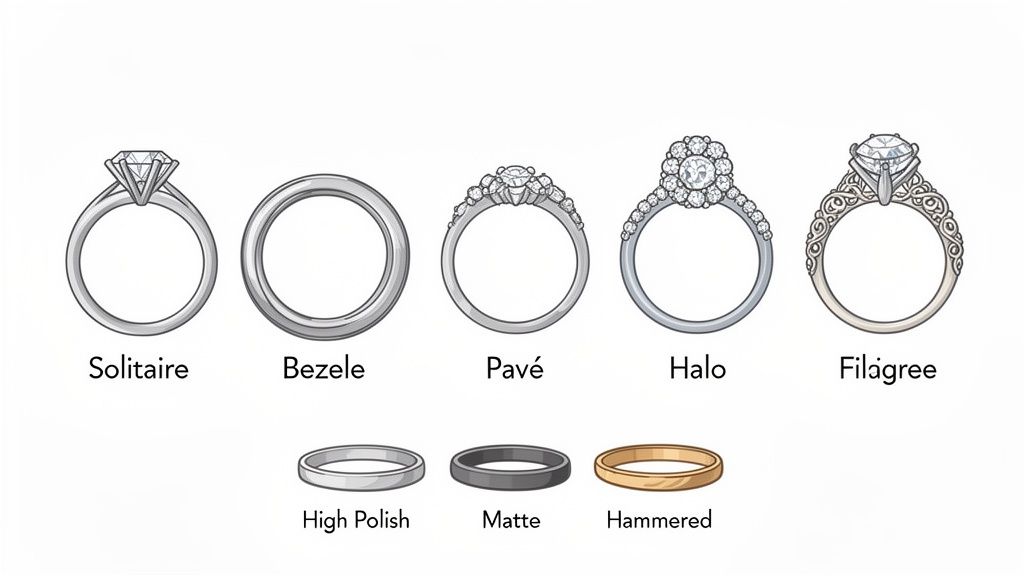
Consider the different effects these popular styles create:
Solitaire Setting: The timeless classic. A single stone is held by four or six prongs, lifting it up to capture the most light possible. This setting makes your gemstone the undisputed star.
Bezel Setting: Modern, sleek, and incredibly secure. A thin metal rim wraps around the gemstone's edge, holding it snugly. It’s a brilliant choice for active lifestyles or for softer stones like emeralds that need a bit more protection.
Halo Setting: For those who want maximum sparkle. The centre stone is surrounded by a ring of smaller pavé diamonds, which not only adds fire but can make the main stone appear much larger.
Pavé Setting: From the French word for "paved," this technique involves setting small diamonds side-by-side along the band for a continuous, glittering surface. It adds incredible texture and life to the ring.
Each style has its trade-offs. A high-set solitaire is dazzling but more exposed, whereas a bezel offers ultimate security with a slightly more contained shimmer.
Selecting a Distinctive Band Finish
The texture of the metal band itself can completely alter the ring's mood. A high polish is traditional, of course, but exploring other finishes can add a layer of character that really sets your design apart.
Think about the feeling you want the ring to have. Is it slick and modern? Or is it more rustic and organic? This is where a subtle detail can make a massive impact.
Popular finishes we work with include:
High Polish: A classic, mirror-like shine that gives the ring a bright, clean look.
Matte or Satin: A soft, frosted appearance that diffuses light for a contemporary, understated feel.
Brushed: A textured finish with fine parallel lines, great for hiding minor scratches and giving off a sophisticated, almost industrial vibe.
Hammered: Created by tapping the metal with a special hammer, this finish results in small, shimmering facets that provide an artisanal, organic quality.
Don’t be afraid to mix things up. A high-polish bezel on a matte band, for instance, can create a stunning contrast that highlights both the stone and the craftsmanship.
It’s a detail many people overlook, but a powerful way to personalise your ring.
Adding Meaningful Personal Touches
Finally, we have the hidden details—the small accents that turn a beautiful ring into a true family heirloom. These touches often hold the most personal meaning, embedding a secret story into the piece that only you and the wearer share.
Consider adding one of these unique elements:
Milgrain Edging: Tiny, beaded details along the edges of the band, adding a delicate, vintage-inspired texture.
Filigree: Intricate, lace-like patterns formed from twisted threads of precious metal, creating a light and romantic feel.
Hidden Engraving: A secret message, date, or symbol inscribed on the inside of the band—one of the most popular ways to add a deeply personal sentiment.
Surprise Stones: A tiny gemstone set on the ring's inner surface, perhaps a birthstone or a favourite colour. This hidden gem is a secret just for the wearer.
By carefully thinking through these settings, finishes, and personal touches, you're crafting more than just jewellery. You’re weaving a narrative in metal and stone, ensuring the final piece is a perfect reflection of your vision.
Working Effectively with a Hatton Garden Jeweller
With your design vision taking shape, it's time to find the right artisan to bring it to life. This is where the magic of Hatton Garden really comes into its own. Working with a jeweller isn't just a transaction; it’s a partnership built on trust, clear communication, and a shared passion for creating something truly special.
The relationship you build is everything. A great jeweller does more than just follow instructions—they’re your expert guide, offering insights on structural integrity, which metals will last a lifetime, and the subtle design tweaks that can take your concept to the next level.
This hands-on approach is at the heart of the UK’s bespoke jewellery culture. When you design your own ring, the in-person experience is paramount. In fact, a huge 73.5% of all jewellery sales in the UK still happen in physical stores, far more than online. It shows that customers value the ability to see gemstones sparkle, feel the weight of platinum versus gold, and discuss the finer points face-to-face. You can find more insights on UK jewellery market trends at marketresearchfuture.com.
The Initial Consultation and Communicating Your Vision
Think of your first meeting with a jeweller as a discovery session for both of you. You're getting a feel for their craft and process, and they're getting to know your style, your story, and the vision you’ve carefully pieced together.
To get the most out of it, come prepared. Your mood board, sketches, and notes are your best tools. Be ready to chat about:
Your Core Idea: Explain the key features and the overall feeling you want the ring to have.
Material Preferences: Share your thoughts on metals and gemstones, but stay open to their expert suggestions—they might recommend something even better.
Your Budget: Being upfront about your budget from the start is crucial. It lets the jeweller suggest clever, beautiful solutions that work within your financial plans.
A great jeweller listens more than they talk. They’ll ask smart questions to understand not just what you want the ring to look like, but what you want it to mean. That deeper understanding is the key to getting it right.
This conversation sets the tone for the entire creative partnership. It’s your chance to make sure you feel comfortable, understood, and confident that they’ll treat your vision with the care it deserves.
From Sketch to Realistic CAD Models
After the consultation, your jeweller translates your shared ideas into a professional design. While some still use beautiful hand-drawn sketches, the industry standard is now Computer-Aided Design (CAD). For anyone looking to design their own rings, this technology is a game-changer.
CAD software creates a stunningly detailed, photorealistic 3D model of your ring. This digital preview lets you see the piece from every single angle, giving you a perfect sense of its proportions, how the stones are set, and all the intricate details long before any precious metal is touched.
This CAD phase is a vital checkpoint. It’s your opportunity to review the design and ask for adjustments. Maybe you want the band a fraction thinner, or the main setting a little lower? These are simple tweaks to make digitally, ensuring the final piece is exactly as you imagined.
Workshop Visits and Prototype Approval
Once you’ve signed off on the CAD model, the next step often involves creating a wax or resin prototype. This is an incredibly exciting moment—holding a 1:1 scale model of your ring in your hands makes the whole design feel real for the very first time.
Many Hatton Garden workshops, including ours at Opulence Jewellery Services, welcome clients to see the process unfold. A workshop visit gives you an invaluable perspective:
See the Craftsmanship: Witnessing the skill and precision first-hand deepens your appreciation for the art of jewellery making.
Confirm the Feel: You can try the prototype on to check that the size, comfort, and proportions feel just right on your hand.
Final Approval: This is your last chance to give the green light before your ring is cast in precious metal.
From the first chat to the finished ring, the timeline typically ranges from four to ten weeks, depending on the design’s complexity. By building a strong, collaborative relationship with your jeweller, you ensure every milestone—from the CAD approval to the final polish—is a step toward creating a piece that perfectly captures your story.
Budgeting for Your Bespoke Ring and Ensuring Its Aftercare
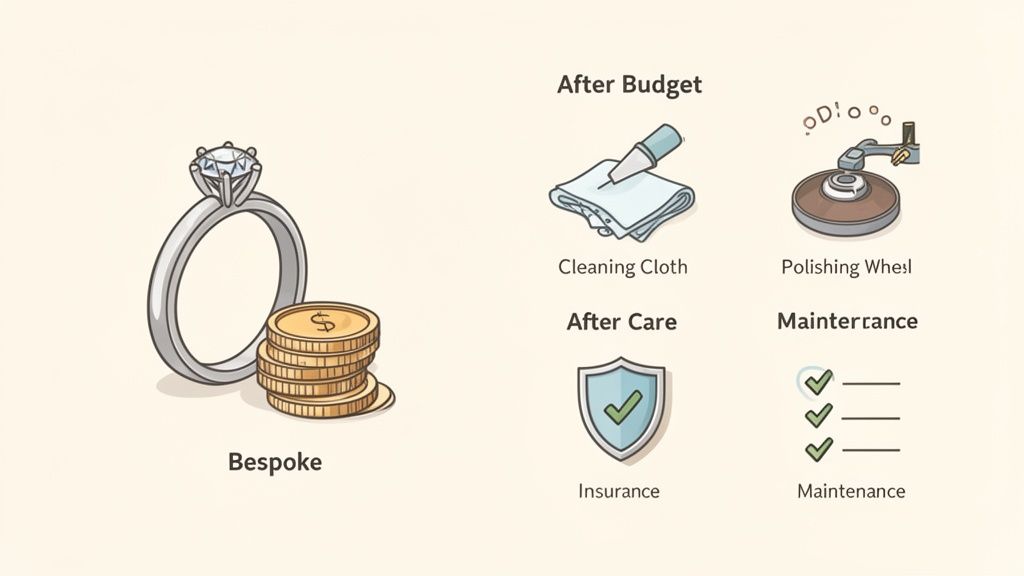
Creating a bespoke ring is a serious investment in your story, so let's talk about the practical side of things: money and maintenance. Getting the budget right from the start doesn't stifle creativity—it focuses it. It helps you and your jeweller concentrate on the details that truly matter to you.
The final price is simply a sum of its parts. Understanding what those parts are—the metal, the stones, the complexity of the design—gives you complete control over the final cost. When you're open with your jeweller about your budget, you start a partnership. We can then use our expertise to guide you to the best choices within your range, ensuring you get maximum impact for your money.
Setting a Realistic and Flexible Budget
When you first start to design your own rings, it’s easy to get swept up in the possibilities. The key is to start with a realistic spending range you feel comfortable with, leaving a little room for flexibility.
Several factors will directly shape the final cost of your ring:
Metal Choice:Platinum is the premium choice due to its density and purity. 18ct gold strikes a fantastic balance between quality and value, while 9ct gold is a more accessible alternative.
Gemstone Selection: The 4 Cs—cut, colour, clarity, and carat weight—are major cost drivers, especially for diamonds. Sometimes, a slightly smaller stone with exceptional brilliance is a far better investment than a larger one with visible inclusions.
Design Complexity: A simple, elegant solitaire will naturally cost less than an intricate hand-carved piece with dozens of tiny pavé-set stones, which requires more labour and materials.
A good jeweller will never push you past your limit. Think of us as a creative partner. We’ll suggest clever, cost-effective solutions, like using high-quality lab-grown diamonds or adding a halo setting to make a centre stone appear larger.
This collaborative approach is vital. It ensures you end up with a ring you not only adore but also feel completely at ease with financially.
Long-Term Care for Your Custom Creation
Once that beautiful ring is on your finger, the journey continues. Looking after your piece is crucial to keeping it as breathtaking as the day you first saw it. A little ongoing care goes a long way in preserving its sparkle, its structure, and its sentimental value for decades to come.
Regular, gentle cleaning at home is the first step. It helps fight the daily build-up from hand lotions, oils, and dust that can make a stone look dull. Different metals and gems need different care, so it’s worth getting it right. For a detailed guide, you can learn more about the best ways for cleaning your wedding rings in our dedicated article.
Professional Maintenance and Protection
While home care is essential, it’s no substitute for an expert eye. We recommend an annual "MOT" for your ring to keep it in peak condition. Think of it as a professional service that catches small issues before they become big problems.
Key services to consider for the long run:
Polishing and Plating: A professional polish buffs out the tiny surface scratches that accumulate over time, restoring the metal’s original shine. For white gold rings, a fresh coat of rhodium plating every few years will bring back that crisp, bright-white lustre.
Prong and Claw Checks: The tiny metal claws holding your gemstones are the most vulnerable part of any ring. We check them to make sure they're tight and secure, preventing the heartbreak of a lost stone.
Insurance and Valuations: Your ring is a valuable asset, and getting it properly insured is non-negotiable. A professional valuation gives your insurer a certified replacement value. It's wise to have this updated every few years as metal and stone prices change.
Protecting your unique creation with proper care gives you the peace of mind to wear it and enjoy it every single day.
Common Questions About Designing a Custom Ring
Starting a bespoke jewellery journey is exciting, but it's natural to have a few questions. When you decide to design your own ring, you’re stepping into a creator's shoes, and it's smart to understand the practical side of things. Here are some straightforward answers to the questions we hear most often in our Hatton Garden workshop.
This whole process is a partnership. Feeling informed and confident is a huge part of the experience, so these insights should help clarify what to expect, from timelines to costs.
How Long Does It Take to Create a Custom Ring?
This is usually the first thing people ask. While every single project is different, you should generally plan for 4 to 10 weeks from your initial design chat to holding the finished ring. That timeframe gives us the space to get every detail right without rushing.
This period covers all the important steps:
In-depth design discussions to really nail down your vision.
Creating and getting your approval on the detailed CAD models.
Casting the ring in your chosen precious metal.
Meticulously setting every gemstone by hand.
Applying the final finishing and polishing touches.
It's always a good idea to start the process well ahead of any special date you've got in mind, like an anniversary or proposal. It just makes for a more relaxed and enjoyable creative journey for everyone.
Is It More Expensive to Design Your Own Ring?
There's a common myth that 'bespoke' automatically means 'more expensive' than buying a ring from a shop window. While a highly complex design with very rare gems can carry a premium, a custom ring is more often about tailoring the piece to fit a specific budget.
When you design your own ring, you have direct control over every single cost. You and your jeweller make strategic decisions together, which lets you invest in the parts of the ring that matter most to you.
By working directly with an artisan, you're not just buying a ring; you're commissioning a piece of art. This often means you can achieve a higher quality of craftsmanship and more personal significance for a similar price to a mass-produced item.
For instance, you might want to prioritise a high-quality centre stone and choose a simpler, more elegant setting to stay within your budget. That level of control means you often get more for your money and, more importantly, a piece that is infinitely more meaningful.
Can I Use My Own Heirloom Gemstones or Gold?
Absolutely. Reimagining heirloom jewellery is a wonderful and sustainable way to honour your family’s history while creating something that truly reflects your own style. Most skilled jewellers are very experienced in carefully removing stones from old settings and building a fresh, new design around them.
You can often melt down old gold to be recast, though sometimes it's more practical for us to give you a credit for the metal's value towards your new piece. Either way, this approach breathes new life into sentimental treasures, making sure they’re worn and loved by a new generation.
Ready to bring your unique vision to life? At Opulence Jewellery Services, our expert jewellers in the heart of Hatton Garden are here to guide you through every step of the custom design process. Visit us to start crafting your one-of-a-kind piece today.
Discover the timeless elegance of the engagement ring emerald cut. Our guide covers choosing the perfect diamond, setting, and provides expert care tips.
Discover how to get the perfect fit for your big day. Our expert guide covers sizing wedding rings, resizing costs, and finding the right jeweller in London.
Learn the safe, expert way to diamond ring clean at home. Our guide shows you how to restore sparkle and avoid costly mistakes, straight from Hatton Garden.